

A hidden water leak can waste thousands of gallons, rot structural materials, feed mold growth, and quietly inflate your water bill for months before anyone notices. The good news is that professionals no longer need to tear open walls or dig up your entire yard to find the source.
So, how does water leak detection work? Technicians combine specialized listening devices, gas tracing, thermal imaging, and pressure testing to pinpoint a leak’s exact location with minimal disruption. This guide explains each method, the equipment involved, and what to expect when you call a professional.
What Is Water Leak Detection?
Water leak detection is the process of locating the precise source of a leak in plumbing, whether it’s behind a wall, under a concrete slab, or buried in a water line. The goal is accuracy: find the leak, confirm it, and repair only what’s necessary.
Most professional leak detection is non-invasive, meaning technicians use sound, temperature, gas, and pressure data instead of demolition.
Signs You May Need Leak Detection
- A water bill that rises without a change in usage
- A water meter that keeps moving when all fixtures are off
- Damp spots, stains, or bubbling paint on walls and ceilings
- Warped flooring or musty odors
- Low water pressure
- The sound of running water when nothing is on
- Unusually soft or wet patches in the lawn
You can run a few simple checks yourself first. Our guides on how to find a water leak in your house and how to find a water leak underground cover the common signs and basic tests.
The Main Water Leak Detection Methods
1. Acoustic Leak Detection
Pressurized water escaping a pipe creates a distinct hiss or vibration that travels through the pipe and surrounding material. Acoustic leak detection uses sensitive microphones, ground microphones, and electronic amplifiers to pick up these sounds. The technician moves the sensor along the pipe or ground surface, and the sound grows louder as they near the leak. Filters remove background noise so the spot can be pinpointed precisely.
Best for: Pressurized lines, underground pipes, and leaks inside walls.
2. Tracer Gas Leak Detection
When a leak is too quiet for acoustic tools, such as in plastic pipes or low-pressure lines, technicians use tracer gas. A safe, non-toxic gas, typically a hydrogen-nitrogen blend, is injected into the emptied pipe. The gas escapes through the leak and rises to the surface, where a sensitive detector picks it up.
Best for: Low-noise leaks, plastic pipes, and pinhole leaks.
3. Infrared and Thermal Imaging
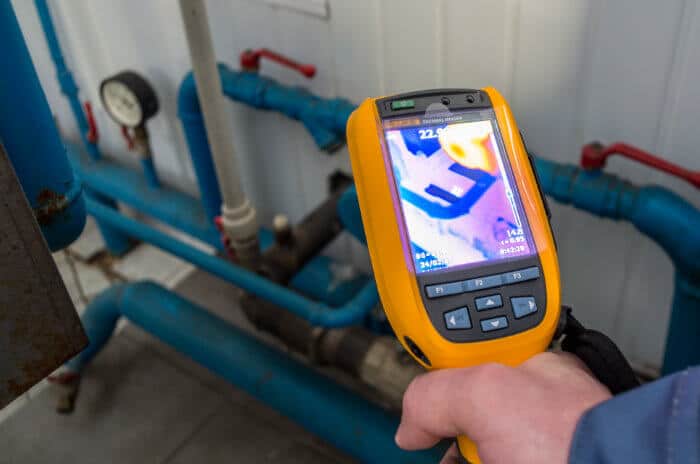
Thermal cameras detect temperature differences on surfaces. A leaking hot-water line shows up as a warm patch, while a cold-water leak creates a cooler, damp area. This lets technicians scan walls, ceilings, and floors without opening them.
Best for: Hot-water leaks, radiant heating lines, and moisture behind finished surfaces.
4. Pressure Testing
A technician isolates a section of plumbing, pressurizes it, and watches the gauge. A pressure drop confirms a leak and shows which section of pipe is affected. It’s often the first step that tells the team where to use other tools.
Best for: Confirming a leak and isolating the affected line.
5. Moisture Meters
Pin and pinless moisture meters measure water content in drywall, wood, and concrete. They help map the extent of damage and trace moisture back to its source.
6. Video Pipe Inspection
A waterproof camera on a flexible cable travels through drain and sewer lines, giving a live view of cracks, breaks, root intrusion, and blockages.
Which Method Fits Which Leak?
| Leak Location | Typical Method |
|---|---|
| Under a concrete slab | Acoustic + thermal imaging |
| Buried supply lines | Acoustic + tracer gas |
| Main water line | Acoustic + pressure testing |
| Sprinkler or irrigation lines | Pressure testing + acoustic |
| Fire protection lines | Pressure testing + acoustic |
| Behind walls or ceilings | Thermal imaging + moisture meter |
Slab leaks deserve special mention. They’re hard to spot and can damage flooring and foundations, so early slab leak detection can save a lot of repair cost.
Equipment Used in Professional Leak Detection
- Electronic listening devices and ground microphones to hear leaks through soil, concrete, and walls
- Correlators that compare sound at two points on a pipe to calculate the leak’s distance
- Tracer gas detectors to find gas escaping to the surface
- Thermal imaging cameras to reveal temperature anomalies
- Pressure gauges and test plugs to isolate and test pipe sections
- Moisture meters to map wet materials
- Pipe locators to trace buried lines before any digging
- Inspection cameras for drain and sewer lines
Professional-grade equipment, combined with an experienced technician’s judgment, is what separates a quick diagnosis from guesswork.
What to Expect During a Leak Detection Visit
- Discussion and history. The technician asks about symptoms, water bills, and when you first noticed the problem.
- Visual inspection and meter check. They look for visible signs and confirm the leak by checking whether your meter moves with everything off.
- Isolation and pressure testing. The system is segmented to find which line is leaking.
- Pinpointing. Acoustic, tracer gas, thermal, or camera tools locate the exact spot.
- Findings and options. You get a clear explanation of what was found and your repair options.
- Targeted repair. Because the leak is pinpointed, work is limited to a small area instead of broad excavation or demolition.
Most inspections take a few hours, though large commercial properties can take longer.
Residential vs. Commercial Leak Detection
A leak in a single-family home is very different from one in a hotel, hospital, or manufacturing plant. Commercial buildings have longer pipe runs, more fixtures, and higher costs from downtime, so the approach and equipment scale accordingly. Whether you’re a homeowner or a facility manager, Alpha’s plumbing services cover both.
Why Professional Leak Detection Beats DIY
DIY checks, like the meter test or dye tablets in a toilet tank, can confirm that a problem exists. But they can’t tell you where it is. Professionals save you money by:
- Avoiding unnecessary demolition and repair costs
- Preventing long-term damage like mold, foundation shifts, and rotted framing
- Reducing water waste and utility costs
- Providing documented findings that may help with insurance claims
Don’t Wait on a Suspected Leak
Small leaks rarely stay small. If you suspect one, our team offers emergency leak detection around the clock.
Call Alpha Energy Solutions at (888) 212-6324 or contact us online for fast, accurate leak detection.
Frequently Asked Questions
How does water leak detection work without digging?
Technicians use acoustic sensors, tracer gas, thermal imaging, and pressure testing to locate leaks from the surface, so excavation is limited to the exact repair point.
How accurate is leak detection equipment?
In trained hands, modern equipment can narrow a leak down to a small area. Accuracy depends on pipe material, depth, and background noise, which is why professionals often combine several methods.
How long does leak detection take?
A typical residential inspection takes a few hours. Large commercial properties or buried lines may take longer.
Does leak detection damage my property?
No. The methods are non-invasive, and any access needed is small and limited to the leak’s location.
Can leak detection find leaks under a slab?
Yes. Acoustic and thermal tools can locate slab leaks without breaking up the whole floor.
How do I know if I have a leak?
Check for unexplained water bill increases, a moving meter with all water off, damp spots, or musty smells. A professional inspection confirms it.